Speed without a foundation is just a faster way to fail
The most visible effect of AI on software development is speed. A working demo that used to take two weeks can now take two days. That is a real, structural change, and it is tempting to treat it as the whole story.
It is not. Generated code still needs to run in production, under real load, with real data, real edge cases, and real users who do things nobody anticipated. AI accelerates the part of the process that produces code. It does not automatically produce good architecture, sensible data models, or systems that are safe to extend six months later.
What actually changes when a team is AI-first
AI-first does not mean "AI writes the code and a human reviews it at the end." It means AI is used deliberately at every stage where it removes friction: scaffolding, boilerplate, test generation, documentation, first-draft implementations of well-understood patterns.
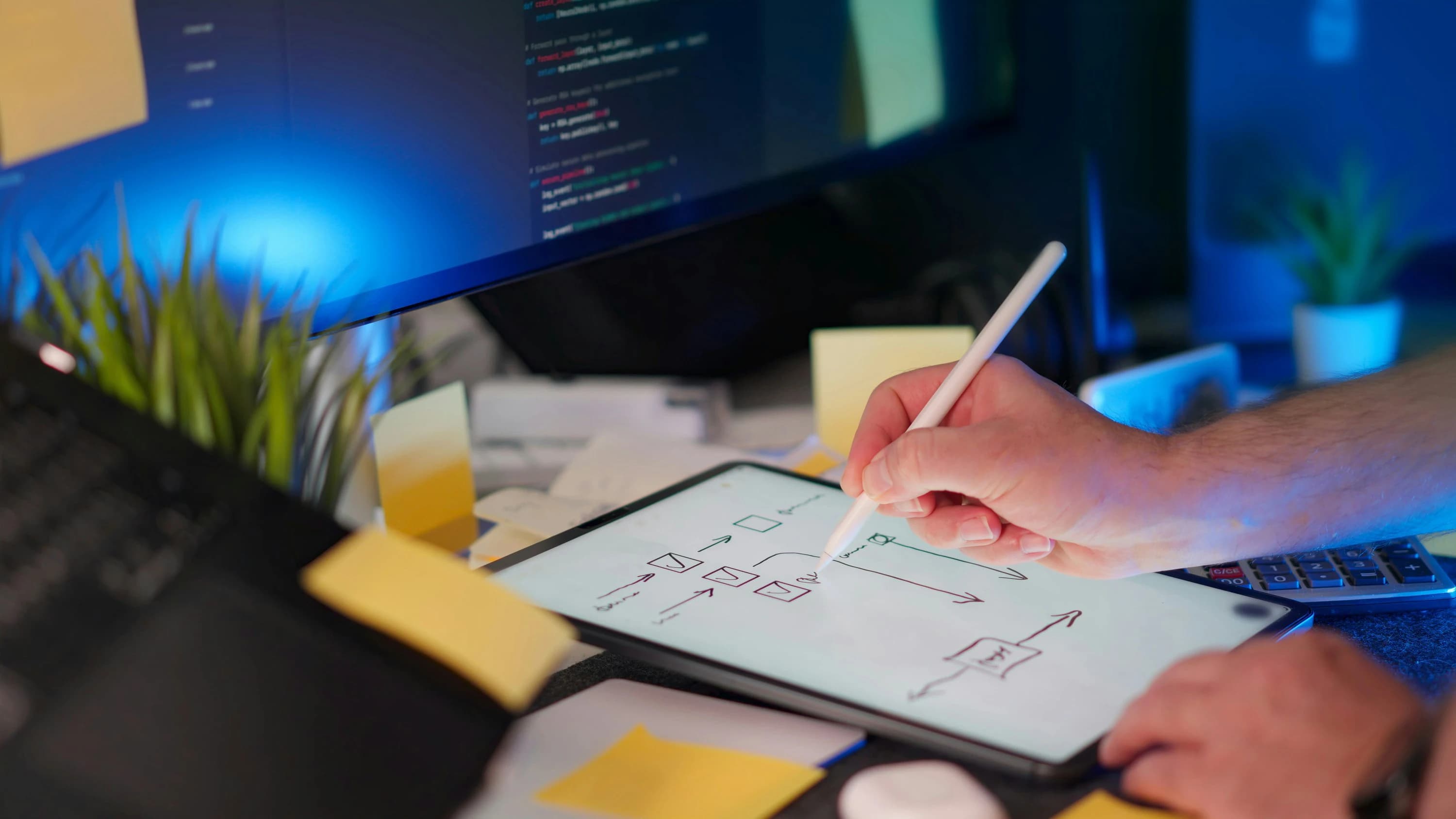
The stages that still need senior judgment do not disappear — they just move earlier. Deciding what to build, how data flows through the system, where the trust boundaries are, and what the system should refuse to do all still require someone who understands the business, not just the prompt.
Where AI-generated systems tend to fail
In practice, the failure mode is rarely "the AI wrote broken code." It is usually architectural: inconsistent data models across features that were each generated in isolation, security assumptions that were never made explicit, and integrations that work in the demo but were never designed for retries, rate limits, or partial failure.
None of that is a reason to slow down. It is a reason to keep a senior engineering perspective in the loop, especially at the points where decisions are hardest to reverse later.
The practical takeaway
Use AI aggressively for everything that benefits from speed. Keep architecture, data design, and security decisions deliberate. The teams getting the most value from AI right now are not the ones generating the most code — they are the ones who know exactly which 20% of the work still needs a human making the call.